
The short answer
A heat pump heats and cools with one electric system and pairs well with the valley's dry summers and mild winters. We check your ducts, electrical panel, and home's load before recommending equipment, and we explain how Bay Area Air District furnace rules and current local incentives factor into the decision.
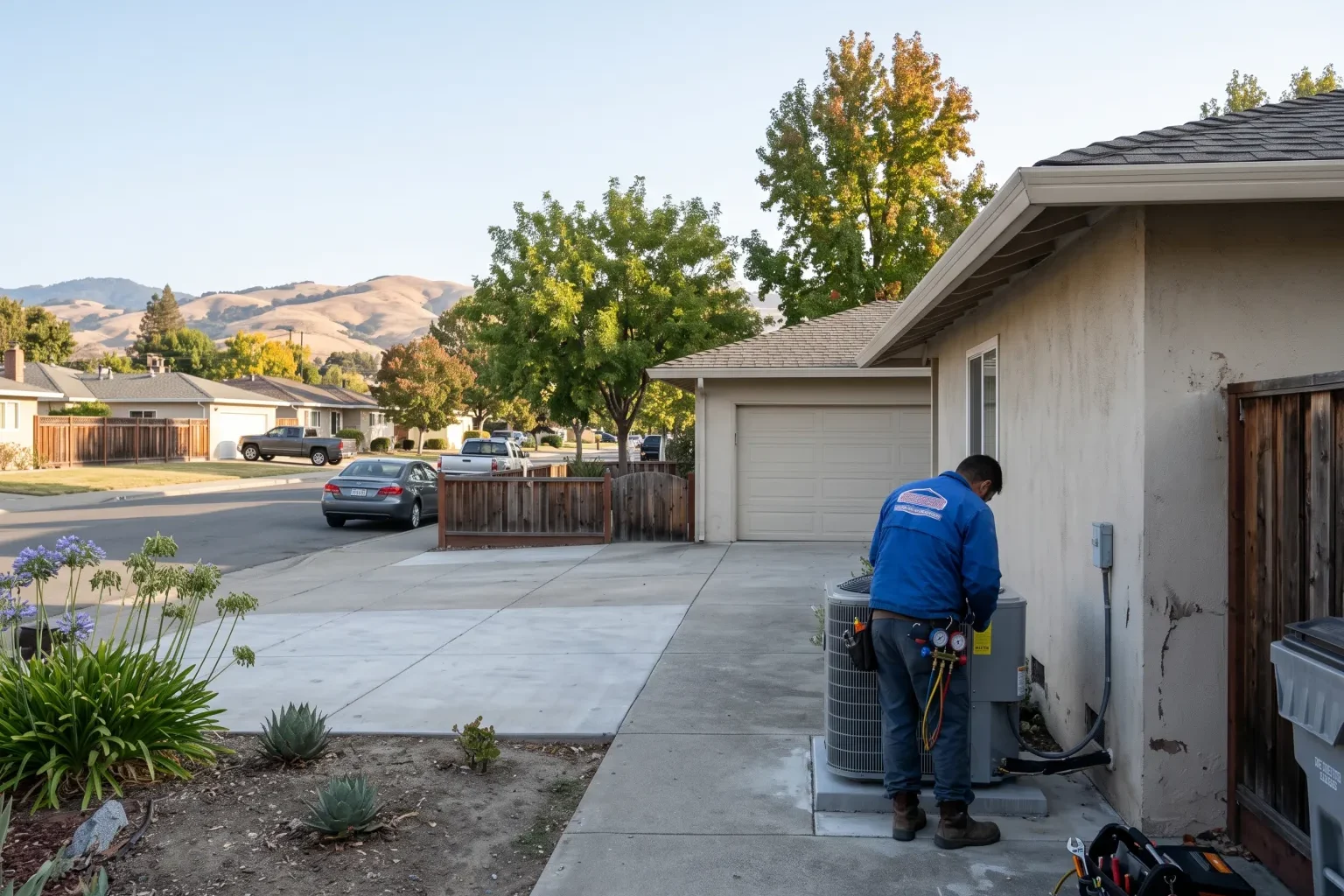
A heat pump moves heat instead of making it. In summer it pulls warmth out of your house and dumps it outdoors; in winter it reverses and draws heat from the outside air, even on a cool, foggy morning, and brings it inside. That single system replaces both a furnace and a central air conditioner, and the Santa Clara Valley's mild, damp winters are well suited to it. EliteAir Heating & Cooling designs and installs ducted and ductless heat pumps for homeowners in San Jose and the cities around it. On this page we cover when switching makes sense, what we inspect before sizing equipment, how to think about fixing an existing heat pump versus installing a new one, what moves the project cost, and how the installation unfolds.
Good Reasons to Switch to a Heat Pump
Many homeowners begin thinking about a heat pump when two problems line up: an aging furnace and an air conditioner nearing the end at the same time. Replacing both with one system often simplifies things. Others are adding rooftop solar, moving away from gas appliances, or simply want cooling in a house that has only ever had heat.
Regulations are part of the picture too. Under Bay Area Air District Rule 9-4, natural gas furnaces manufactured from 2029 must meet a zero-NOx standard, which in practice points people toward heat pumps when a furnace is replaced after that date. Nothing in the rule forces you to pull out working equipment, so the timing is yours to plan.
- Your furnace and AC are both old and you would rather replace them once
- The house has heat but no cooling, and summers inland are getting harder to tolerate
- You have solar panels or plan to add them
- You are remodeling and want to reduce or eliminate gas use
- Your current heat pump is failing and needs a replacement
The Site Survey Before We Recommend Equipment
Heat pumps reward careful sizing. One that is too large short-cycles and leaves rooms clammy; one that is too small runs constantly on the coldest mornings. Our technician calculates the heating and cooling load from your square footage, insulation, window placement, and orientation. A two-story home in a hotter southern neighborhood and a single-story ranch house closer to the Bay can need quite different capacity even at the same size.
Next comes the infrastructure. We inspect the existing ducts for leaks, crushed sections, and undersized runs, since a heat pump typically moves air at lower supply temperatures than a gas furnace and is less forgiving of poor ductwork. We check the electrical panel for capacity and breaker space, look at where the outdoor unit can go with proper clearance and drainage, and confirm the indoor air handler location. For homes where ducts are not practical, we discuss ductless or slim-ducted options instead.
Repairing an Existing Heat Pump vs. Installing New
If you already have a heat pump that is not keeping up, we diagnose before we discuss replacement. Reversing valves, defrost controls, contactors, capacitors, fan motors, and refrigerant leaks are all repairable in the right circumstances, and a well-maintained system can often keep going after the fix.
A new installation tends to be the better route when the compressor has failed on an older unit, when the system uses a refrigerant that is being phased down and getting harder to service, or when the original equipment was never sized correctly for the house. We put both choices in writing so you can compare them directly.
Some homeowners take a hybrid route instead, keeping a gas furnace that still works well and adding a heat pump in place of the old air conditioner. The heat pump handles cooling and most of the heating, and the furnace serves as backup on the chilliest mornings. Because Air District rules leave working furnaces alone, this can be a practical way to stage the transition, and we can lay out how it compares with going fully electric now.
What Drives the Cost of a Heat Pump Project
Every quote is written after the survey because conditions vary so much from home to home. Equipment capacity and efficiency set the baseline, and variable-speed inverter models tend to cost more up front while running more evenly.
Beyond the equipment, the scope of supporting work makes the biggest difference. Electrical panel upgrades, new circuits, duct repairs or replacement, a new air handler location, condensate routing, and concrete pads or wall brackets all affect the total. Converting from a gas furnace may also involve capping the gas line and sealing the old flue.
On incentives: the federal 25C tax credit covered qualifying heat pumps placed in service before December 31, 2025, and it is not available for installations after that date. Bay Area homeowners can still check BayREN and their local clean energy provider for current heat pump and electrification incentives. Since those amounts change by funding cycle, we confirm the current offer before including it in a quote.
From Removal to First Startup
Most ducted heat pump installs take one to two days, depending on whether electrical or duct work is included. The crew removes the old furnace and condenser, sets the new air handler and outdoor unit, and connects refrigerant lines, power, controls, and drainage.
Before charging the system, we pressure-test the lines for leaks and evacuate them to remove air and moisture. After startup we verify refrigerant charge, airflow, and supply temperatures in both heating and cooling modes, and we confirm the defrost cycle operates properly. Finally, we set up your thermostat and explain how a heat pump feels different from a furnace: steadier, gentler warmth rather than short blasts of very hot air.
That difference catches some people off guard during the first winter. A heat pump works best when you pick a comfortable setting and leave it, rather than turning the temperature way down at night and cranking it back up at dawn. We show you how to program schedules that suit your routine and point out the outdoor unit's defrost behavior, so a little steam on a damp morning does not cause alarm.
Heat Pump Installation by city
- Heat Pump Installation in Campbell
- Heat Pump Installation in Santa Clara
- Heat Pump Installation in Los Gatos
- Heat Pump Installation in Monte Sereno
- Heat Pump Installation in Cupertino
- Heat Pump Installation in Saratoga
- Heat Pump Installation in Sunnyvale
- Heat Pump Installation in Milpitas
- Heat Pump Installation in Mountain View
- Heat Pump Installation in Los Altos
- Heat Pump Installation in Fremont
- Heat Pump Installation in Los Altos Hills